




















When discomfort comes from more than the weather
Moving into a newly completed home or installing brand-new cabinets, wardrobes, tables, and other furniture is an exciting experience. Everything looks clean, modern, and carries the distinctive scent of new materials. Yet after only a few days, some people begin experiencing symptoms such as irritated eyes, dry throat, headaches, or restless sleep. These issues are often blamed on changing weather, work-related stress, or simply adjusting to a new environment.
In many cases, however, the real cause may be the air inside the home itself.
What is off-gassing?
Off-gassing is the process by which building materials and furnishings release volatile organic compounds (VOCs) and residual gases into the surrounding air.
This process commonly occurs in a wide range of interior materials, including:
- Engineered wood panels
- Paints and surface coatings
- Adhesives
- Carpets and rugs
- Curtains
- Various decorative interior materials
Among these emissions, formaldehyde is one of the most closely monitored substances because it can be released from the adhesives used in the manufacture of engineered wood products.
Emission rates are generally highest when products are new and gradually decrease over time. However, depending on the quality of the material, the type of adhesive used, and environmental conditions, off-gassing may continue for several months or even years.
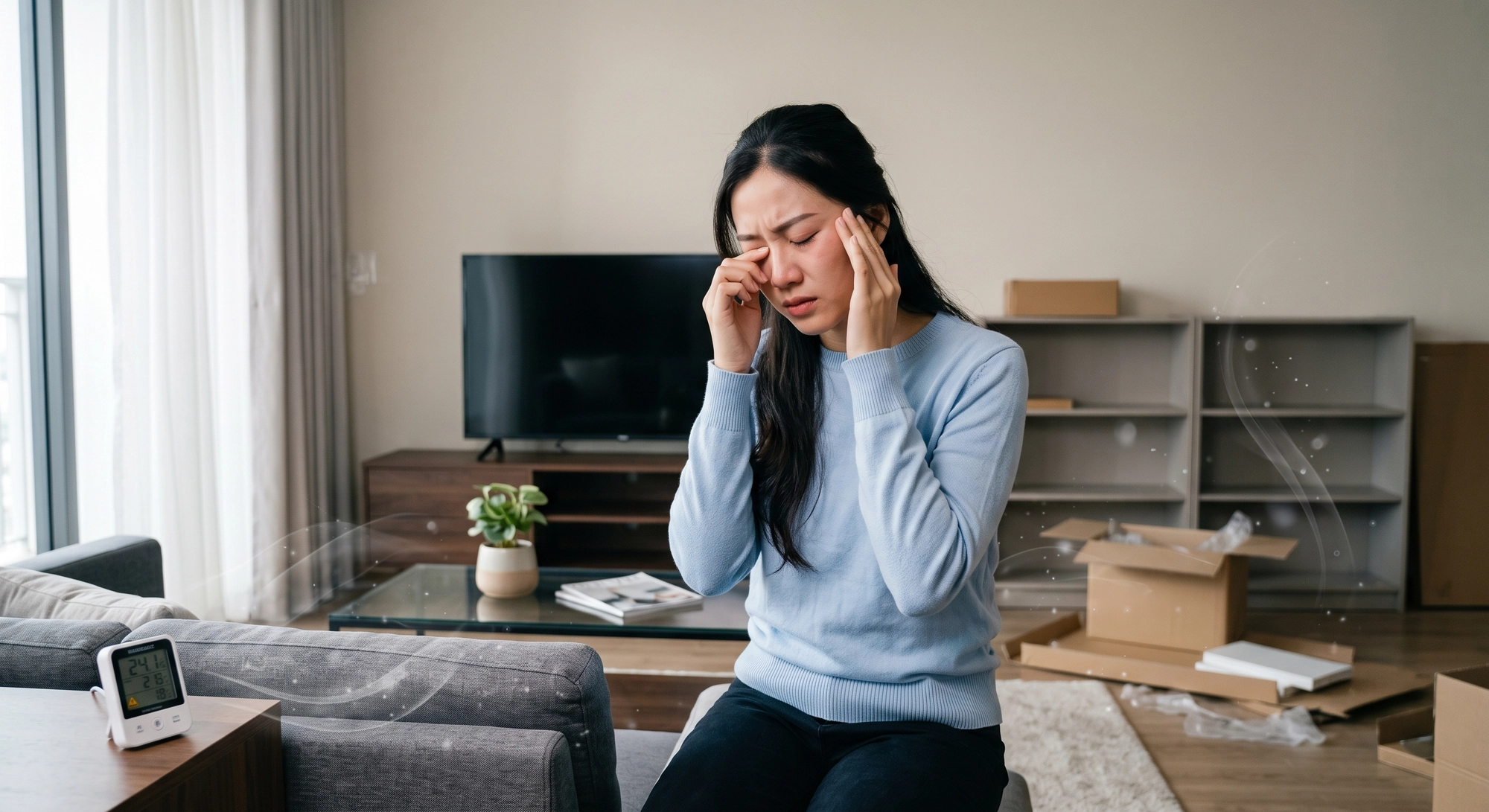
Common symptoms of poor indoor air quality
Not everyone reacts to airborne emissions in the same way. However, some of the most commonly reported symptoms include:
Eye irritation and watery eyes
Exposure to airborne irritants can cause burning, itching, redness, or excessive tearing, even in people who do not spend long hours in front of digital screens.
Dry throat and respiratory discomfort
Many people experience a dry or scratchy throat upon waking, feel the need to drink water frequently, or notice discomfort after spending extended periods in enclosed spaces.
Headaches and fatigue
Indoor air containing elevated levels of pollutants may affect concentration and alertness, leading to persistent headaches, unexplained tiredness, or a general feeling of sluggishness.
Allergic reactions and skin sensitivity
Individuals with sensitive skin or allergies may experience symptoms such as itching, sneezing, or skin irritation after prolonged exposure to emissions from certain interior materials.
Sleep disturbances
A new home is often associated with better comfort and better sleep. However, if indoor air quality is compromised, the body may struggle to fully relax, resulting in lighter sleep, frequent waking during the night, or difficulty achieving restful sleep.

Air quality is not always easy to detect
One common misconception is that only materials with a strong odor pose a risk to indoor air quality.
In reality, the intensity of a product’s smell does not accurately reflect its safety. Some materials may no longer have a noticeable odor while continuing to release chemical compounds over an extended period. Simply put, our sense of smell is not a reliable indicator of indoor air quality.
How can you reduce the risk?

Homeowners can take several proactive steps to create a healthier indoor environment:
- Choose materials that meet recognized formaldehyde emission standards.
- Request laboratory test reports or certifications from reputable third-party organizations.
- Ensure good natural ventilation during the first few months after installing new furniture.
- Avoid products with unclear origins or without transparent technical specifications.
- Evaluate the quality of the core material and adhesive system, rather than judging products solely by their surface appearance.
Indoor air quality is part of quality living
When selecting furniture and interior materials, most people focus on aesthetics, style, and durability. Yet one of the most important factors often goes unnoticed: the quality of the air these materials contribute to inside the home.
If you experience symptoms such as irritated eyes, a dry throat, headaches, or poor sleep after installing new furniture, do not automatically assume they are caused by seasonal changes or everyday fatigue. In some cases, they may be subtle signs that your indoor environment deserves closer attention.
After all, a beautiful home should not only look exceptional. It should also provide a healthy, comfortable place to live.